
VALORANT Radiant International Invitational 2026 - Everything You Need to Know
Six teams will form three squads for the group stage before splitting up to compete individually for the championship in Xiamen, China, from December 6–12.
CHINA – Six teams will head to Xiamen this December for the 2026 VALORANT Radiant International Invitational, featuring an unusual format that will see teams join forces during the group stage before competing against each other in the playoffs.
The tournament will take place from December 6 to 12 at the Xiamen Baixiang Convention & Exhibition Center, bringing together three VCT CN teams and three international teams from the Pacific, Americas, and EMEA regions.
Unlike conventional tournaments, the six participating teams will first be paired into three two-team squads, with each squad consisting of one CN team and one international team.
These partnerships will remain in place throughout the group stage, where teams must work together to qualify for the playoffs. Once the group stage concludes, however, the partnerships will end, and the four remaining teams will compete individually for the championship.
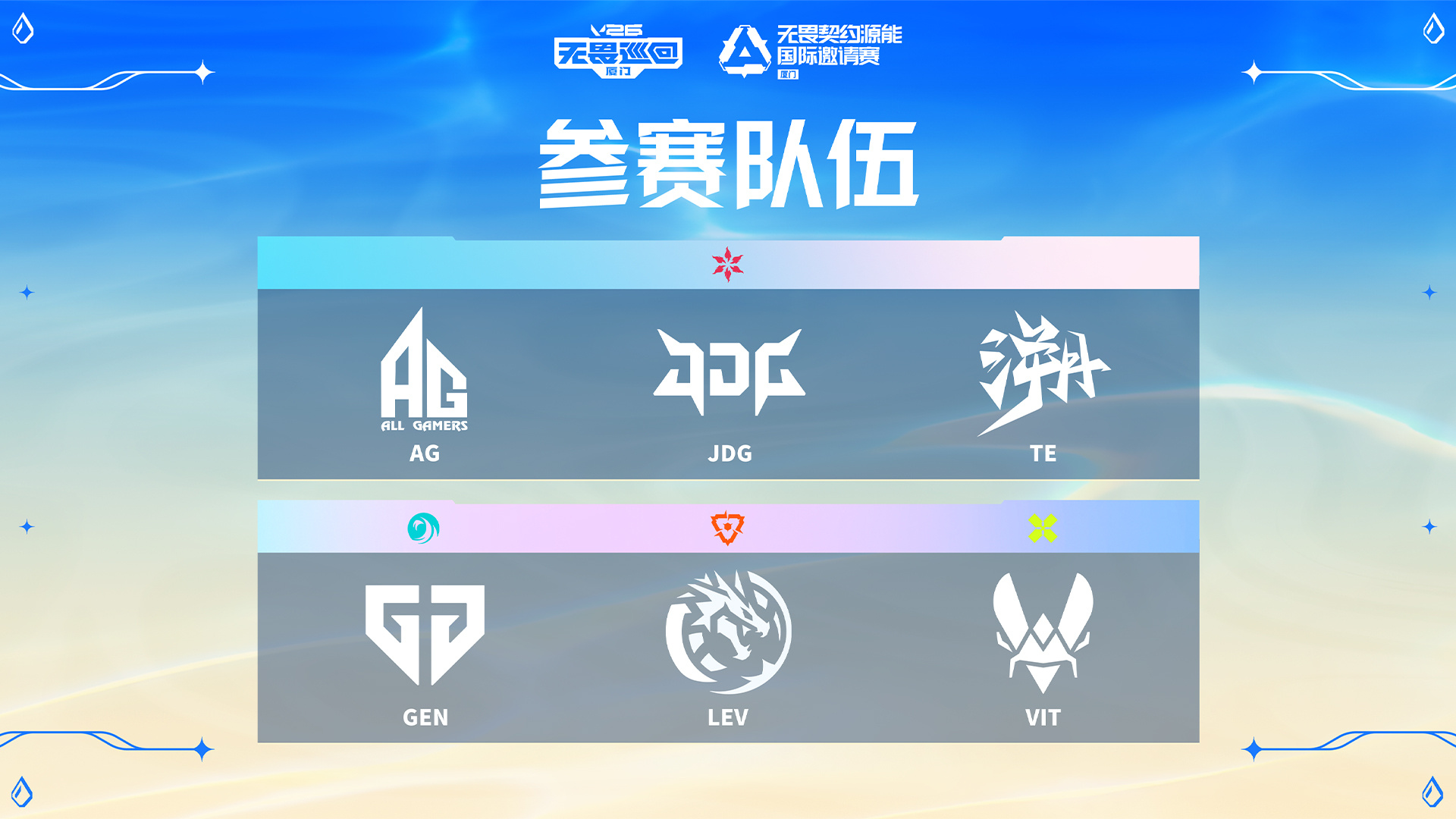
The six invited teams are:
All Gamers (VCT CN)
JD Gaming (VCT CN)
Trace Esports (VCT CN)
Gen.G (VCT Pacific)
LEVIATÁN (VCT Americas)
Team Vitality (VCT EMEA)
Stage 1: Squad Selection Ceremony
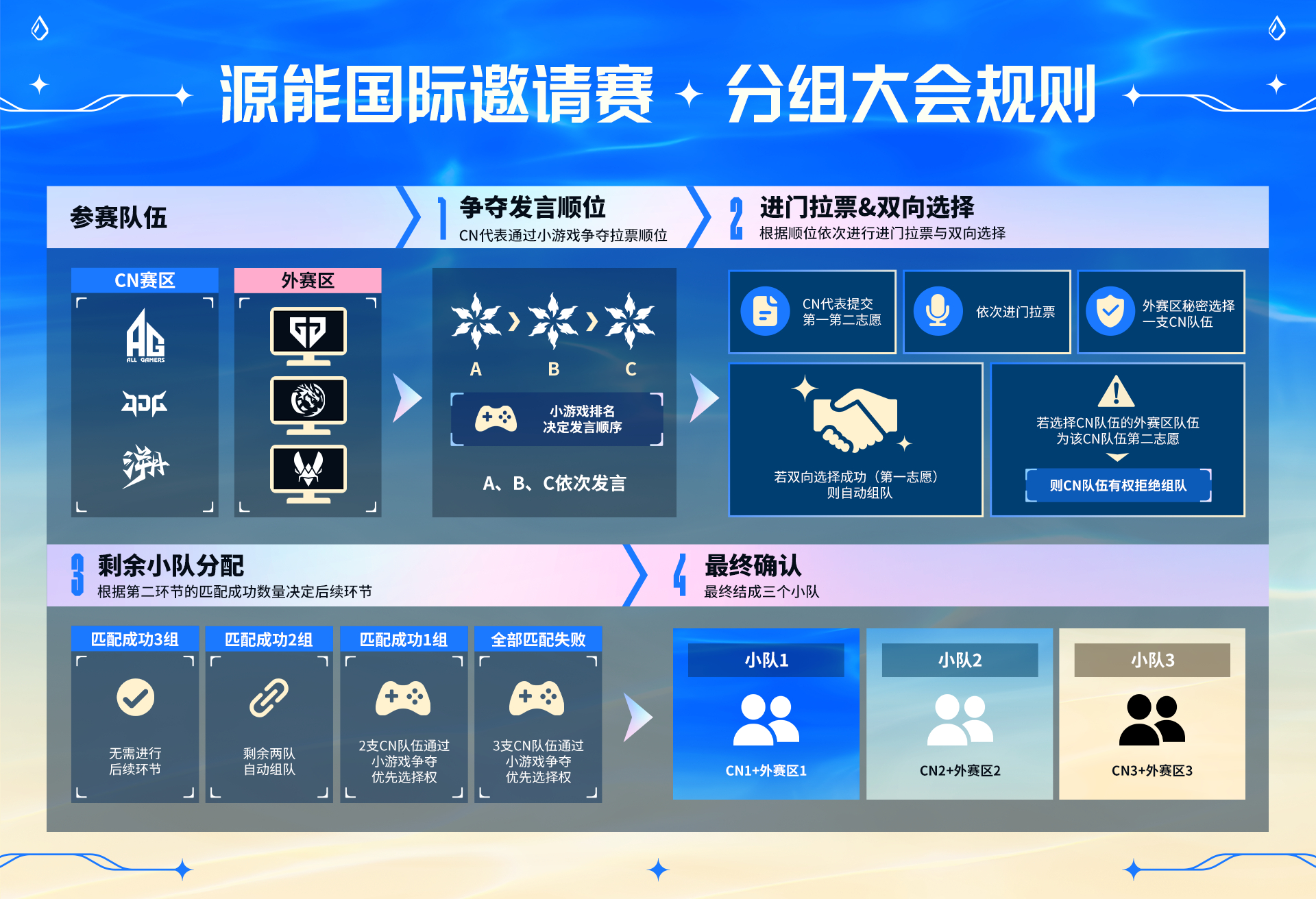
Before the tournament begins, all six teams will participate in a squad selection ceremony, known as the Group Formation Ceremony (分组大会), to determine their partners.
Each squad must consist of exactly two teams: one from VCT CN and one international team. For example, All Gamers could potentially pair up with Gen.G, while JD Gaming and Trace Esports would each partner with one of the remaining international teams. However, the pairings will not be decided by a conventional random draw.
The selection process has three main parts:
1. Minigame to determine speaking order
The three Chinese teams will participate in a minigame to establish the order in which they can pitch to the international teams.
2. Pitching and mutual selection
Each Chinese team submits its first and second preferred partners, while the international teams privately select which Chinese team they want to join. Teams will then make their pitches in the established order.
If a Chinese team and an international team select each other as their first choice, they will automatically form a squad. However, if an international team selects a Chinese team that only ranked it as its second choice, the Chinese team may reject that pairing.
3. Finalizing the remaining squads
The final step depends on how many squads were successfully formed during the previous round.
3 squads formed: The selection process ends.
2 squads formed: The remaining two teams are automatically paired.
1 squad formed: The remaining Chinese teams compete in another minigame to determine who chooses first.
0 squads formed: All three Chinese teams participate in another minigame to determine selection priority.
During the final selection round, Chinese teams choose from the remaining international teams, who can no longer reject the pairing. Once all three squads are confirmed, the tournament can officially begin.
Stage 2: Group Stage (December 6–8)
The group stage introduces a format called TO5, where each matchup consists of five maps (Patch 13.11) that must all be played, regardless of the score.
The three squads will compete in a single round-robin, meaning each squad faces the other two squads once.
Unlike a traditional BO5, where the series ends as soon as a team wins three maps, a TO5 will continue until all five maps have been completed.
For example, if Squad A wins the first three maps against Squad B, the remaining two maps must still be played.
How does the scoring work? A squad earns one point in the standings by winning at least three of the five maps in a matchup.
A 3-2, 4-1, or 5-0 result will therefore all award the winning squad one point.
After all three squad matchups have been completed, the two highest-ranked squads will qualify for the playoffs.
This means four individual teams advance, while the two teams belonging to the last-place squad are eliminated together.
How do two different teams play in one squad?
Although each squad consists of two organizations, the players will not form a combined roster.
Instead, the two teams will divide the maps between themselves.
Each individual team must play a total of five maps across the group stage, split into two maps on one matchday and three maps on the other, or vice versa.
For example, if AG and GEN form one squad:
- Against their first opponent, AG could play two maps and GEN could play three.
- Against their second opponent, AG could play three maps and GEN could play two.
- Each squad can decide which of its two teams will play each map based on the map pick-and-ban results.
- Both teams contribute to their squad's overall map wins, and both will qualify or be eliminated together based on their combined results.
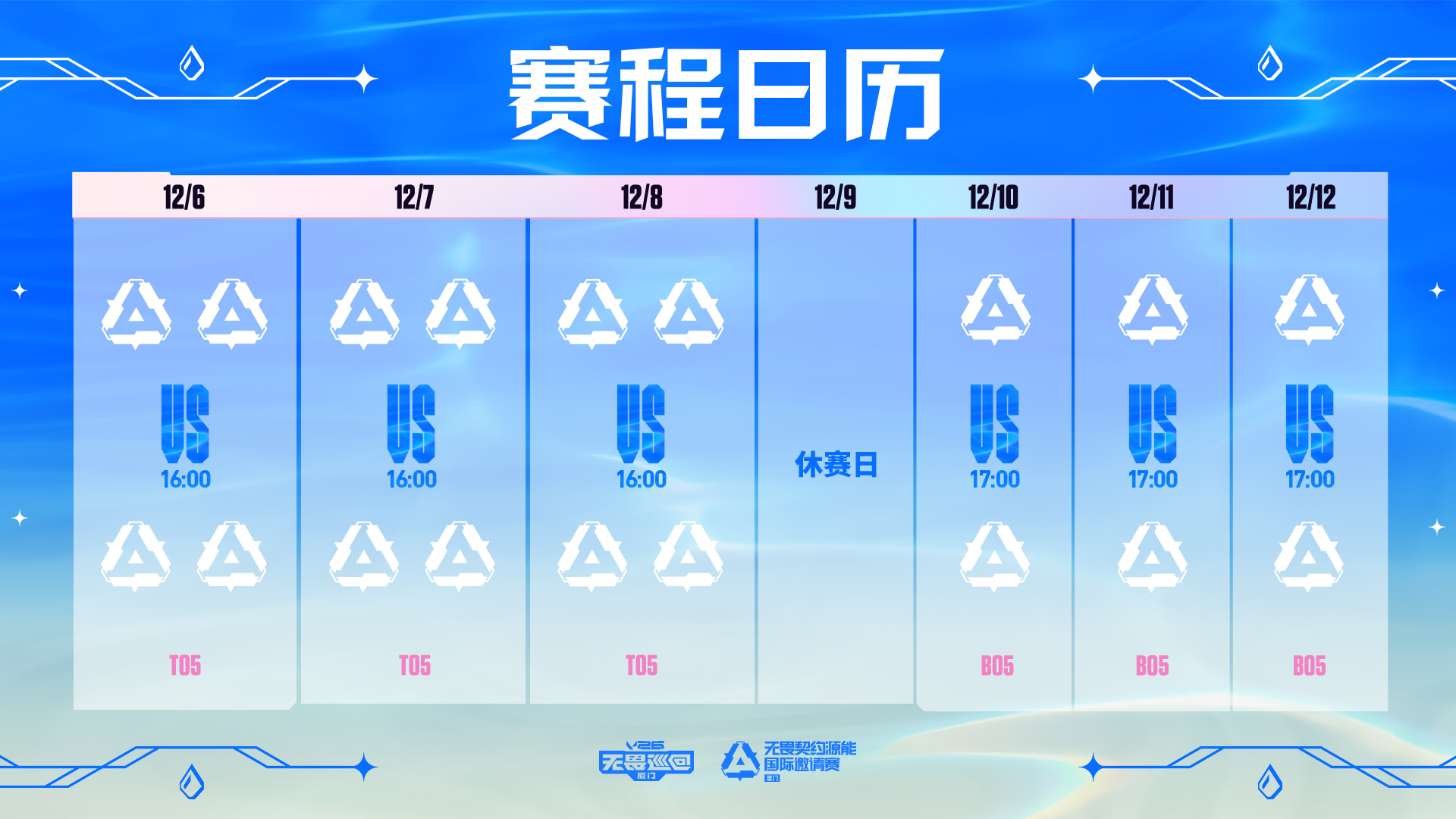
Stage 3: Playoffs (December 10–12)
Once the group stage ends, the partnerships are over.
The four teams belonging to the two qualifying squads will now compete independently in a traditional single-elimination bracket, with all matches played as BO5.
Unlike the group stage, these matches will end once a team secures three map wins.
How are the four teams seeded?
The four teams will be ranked individually from first to fourth based on their map points accumulated during the group stage.
The semifinal matchups will be determined as follows:
- Semifinal 1: Seed #1 vs. Seed #4
- Semifinal 2: Seed #2 vs. Seed #3
This creates another important distinction: squad points determine who qualifies for the playoffs, while individual team map points determine their playoff seeding. The two semifinal matches will take place on December 10 and 11, with the winners advancing to the Grand Final on December 12 to determine the champion.
It also means that two teams who previously worked together during the group stage could potentially end up facing each other in the playoffs.
2v2 Skirmish for Side Selection
The tournament will also feature a 2v2 Skirmish to decide which side receives side-selection rights during the map pick-and-ban process. The players taking part will depend on the tournament stage.
- During the group stage: Each squad must send two players, with one representative from each of its partner teams.
- During the playoffs: Each individual team will send two players.
The winner of the 2v2 Skirmish earns side-selection rights for the corresponding match's map pick-and-ban process.
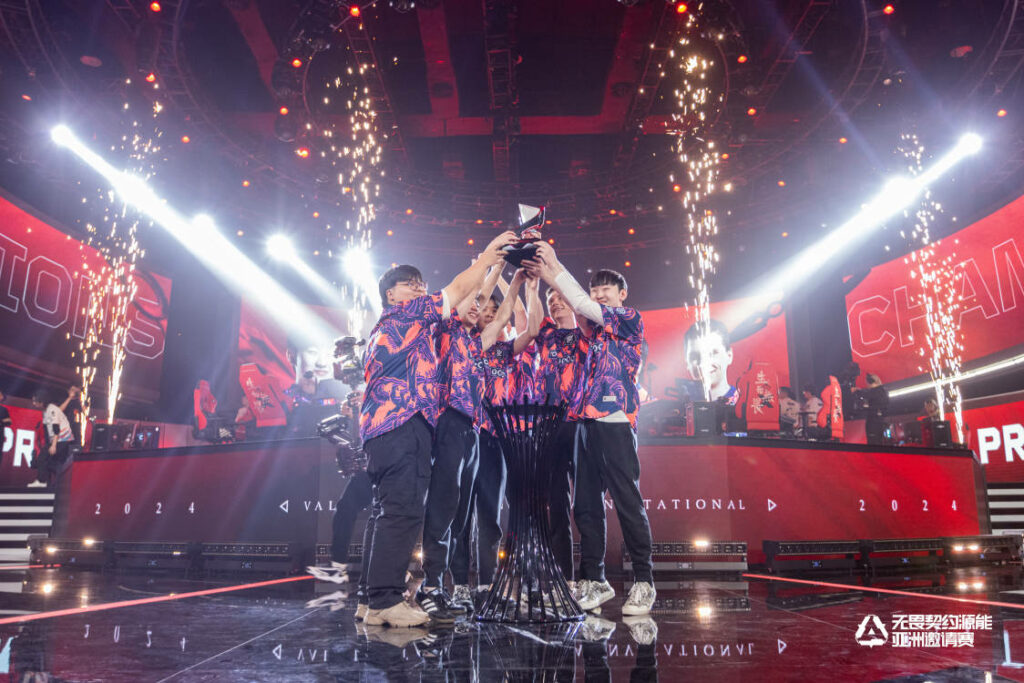
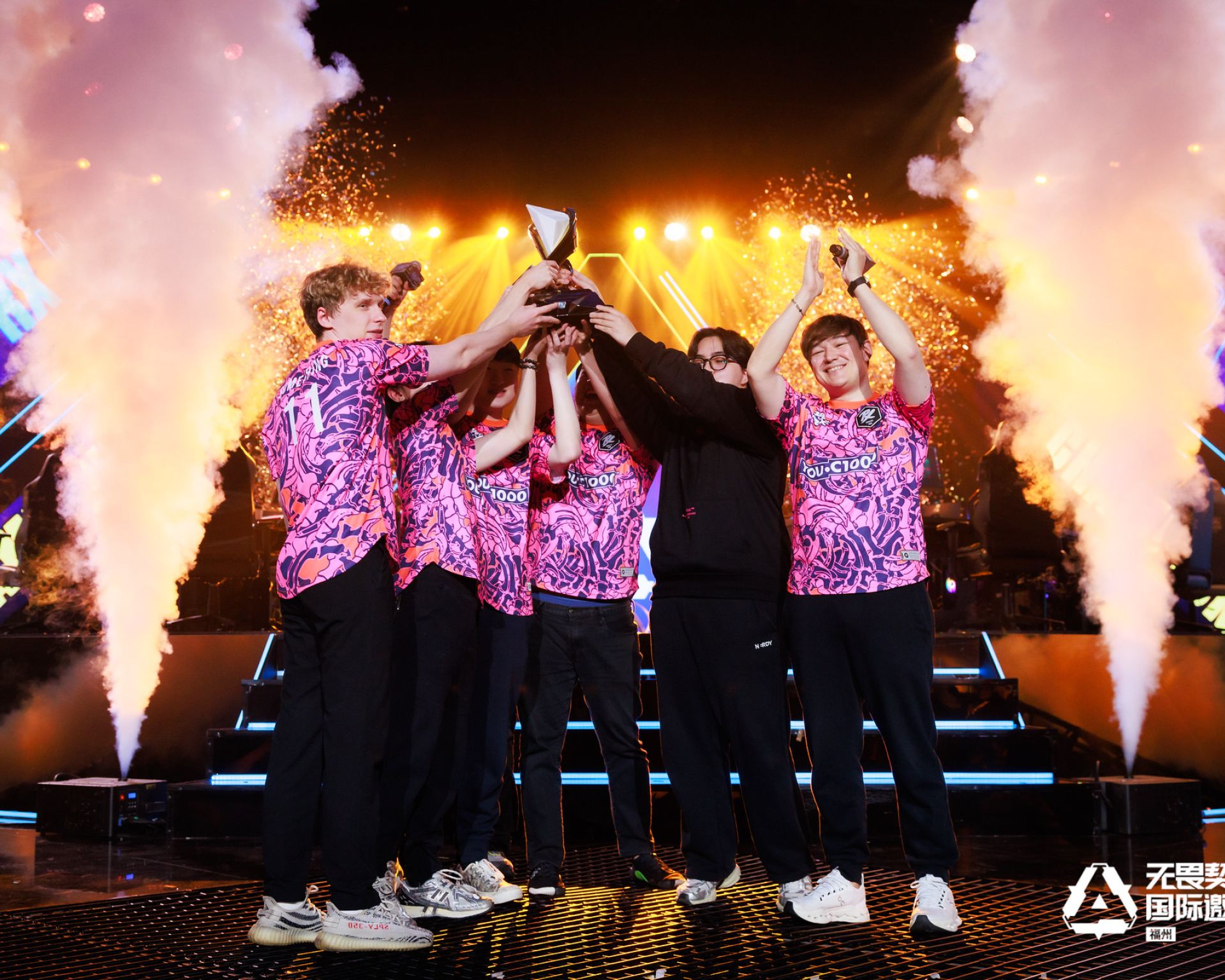
The 2026 tournament marks the third edition of the Radiant Invitational, following two editions won by Paper Rex. The inaugural event, held in Chengdu in 2024 under the name VALORANT Radiant Asia Invitational, featured eight teams from China and the Pacific, with Paper Rex defeating DetonatioN FocusMe 3-1 in the grand final.
The tournament expanded beyond Asia in 2025, bringing six teams to Fuzhou, where Paper Rex successfully defended their title with another 3-1 victory, this time against Gen.G. With Paper Rex absent from the 2026 lineup, the tournament is guaranteed to crown a new champion.
For more insights on the Asian VALORANT scene and upcoming content like this, be sure to like and follow VALO2ASIA on Facebook, Twitter & Instagram.