Riot restructures Challengers SEA with a new local-to-regional format, introduces direct Stage 2 Playoffs qualification, and lifts streaming exclusivity.
THAILAND – Riot Games has announced a sweeping overhaul to the Challengers Path to Champions system, introducing major structural changes especially in APAC that will redefine how tier-two teams progress toward the international stage.
The Challengers SEA announcement was delivered live earlier today at the Imperial Samrong Convention Hall, prior to the VCT Ascension Pacific Finals Weekend, by APAC Head of VALORANT Esports Jake Sin and APAC Esports Product Manager Pablo Lee.
As mentioned in a global announcement last week, under the revamped system in 2026, Challengers teams will no longer rely on Ascension to break into the International Leagues the following year. Instead, teams can qualify directly into Stage 2 Playoffs, which then serves as the gateway to VALORANT Champions.
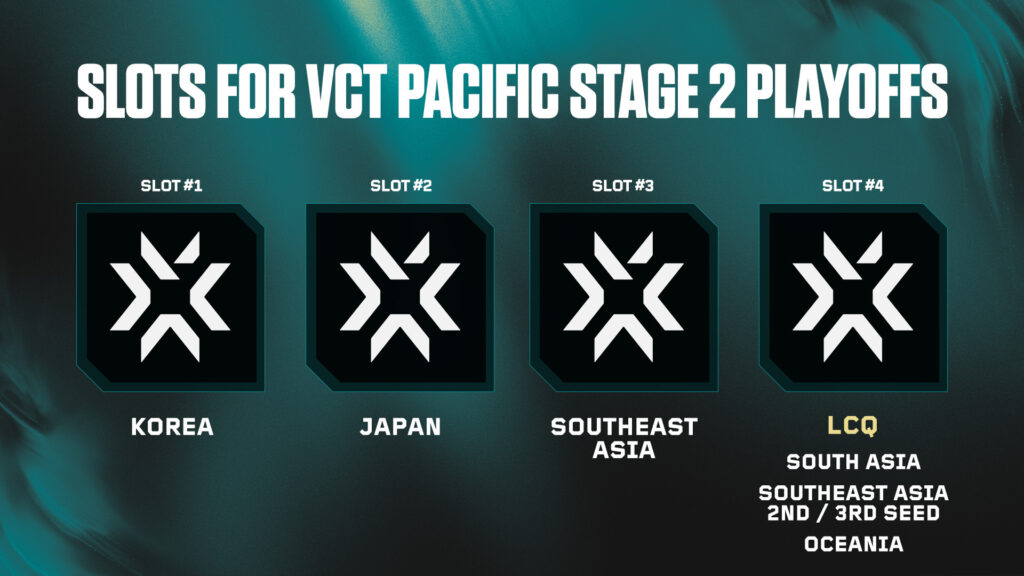
Each International League will reserve four Stage 2 Playoffs spots for Challengers teams. In Pacific, the allocation is as follows:
- 1 slot for the top team from Challengers Southeast Asia
- 1 slot for the top team from Challengers Japan
- 1 slot for the top team from Challengers Korea
- 1 slot determined via a Last Chance Qualifier (LCQ) featuring:
- The best team from South Asia
- The best team from Oceania
- 2nd and 3rd seeds from Southeast Asia
ALSO READ: VCT CN to Tour Seven Cities in 2026 Season Roadshow
“Given the number of highly competitive regions we have in APAC, we focused on finding a balance between recognising regions with a track record of competitive strength, while also ensuring other regions still have a chance to prove themselves and earn a slot. And in the case of Southeast Asia, which has such a large player base and many subregions, we wanted to provide an opportunity to fight for more than 1 slot.”
Challenger teams that qualify for Stage 2 Playoffs will be granted a $75k cash stipend to assist with travel, visas, and attendance in order to participate in the playoffs.
Academy teams will continue to compete in Challengers, but will not be eligible to qualify for Stage 2 Playoffs. Additionally, relegation protection for Academy teams will be removed in 2026, meaning bottom-ranked Academy teams will have to defend their spots like any other team.
Further details on each region’s local Challengers qualifier formats will be announced at a later date.
The upcoming year will also see a restructuring of Challengers Southeast Asia (SEA). Riot is introducing a new tournament model consisting of local competitions that feed into pan-regional play across two splits.
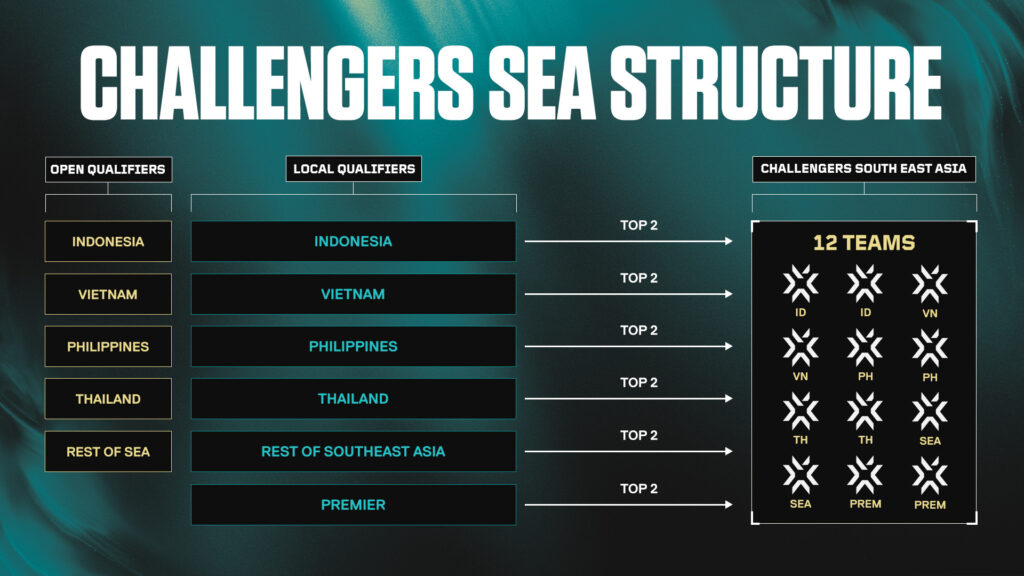
Challengers Southeast Asia will adopt a multi-stage funnel system:
- Open Qualifiers at the local level
- Local Qualifying Tournaments, where Academy teams will also begin their run
- Top 2 from each local qualifier advance to the 12-team Challengers Southeast Asia tournament
This qualification flow will reset for each split. Five local qualifiers will be launched across the region for:
- Thailand
- Indonesia
- Vietnam
- The Philippines
- A Rest-of-SEA qualifier covering all remaining SEA subregions
Players will still be able to qualify via Premier, with the top two Premier teams from each Episode earning spots in the upcoming Challengers SEA split regardless of residency.
“Our goal with this new structure is to be more intentional about bringing representation to Challengers Southeast Asia, while creating more room for competition and talent development at the local level.”
In response to widespread feedback from teams, talent, and viewers, Riot confirmed that streaming exclusivity for Challengers SEA will be abolished in 2026.
“We also recognise that streaming exclusivity was a pain point for our teams and fans this year. So we are lifting exclusivity for Challengers Southeast Asia next year and will be working with local partners to provide local language broadcasts for our community.”
Previously, matches were bound to a broadcast exclusivity deal with SOOP. Removing this restriction means the tournament can now be streamed on other platforms such as YouTube and Twitch, allowing for increased visibility, fan engagement, and content opportunities.
Riot will also collaborate with regional partners to provide localized broadcasts in multiple Southeast Asian languages.
For more insights on the Asian VALORANT scene and upcoming content like this, be sure to like and follow VALO2ASIA on Facebook, Twitter & Instagram.
Cover photo courtesy of VALORANT Esports
